Arc Pad Seasteading Resort
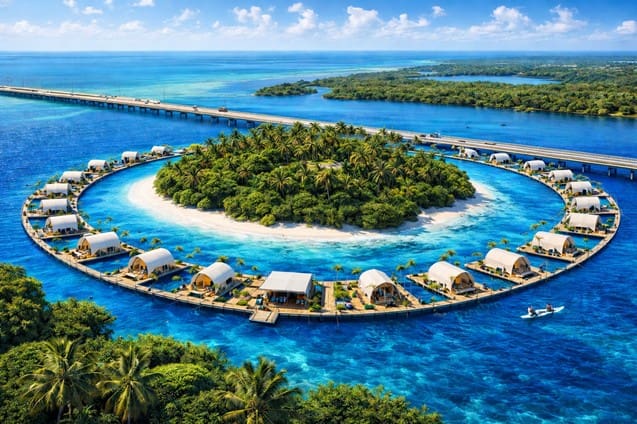
The protected lagoon where the island is centered could be ideal for a resort with the floating “ark-pad” modular floating resort houses, such have been built in Mexico and the Philippines.
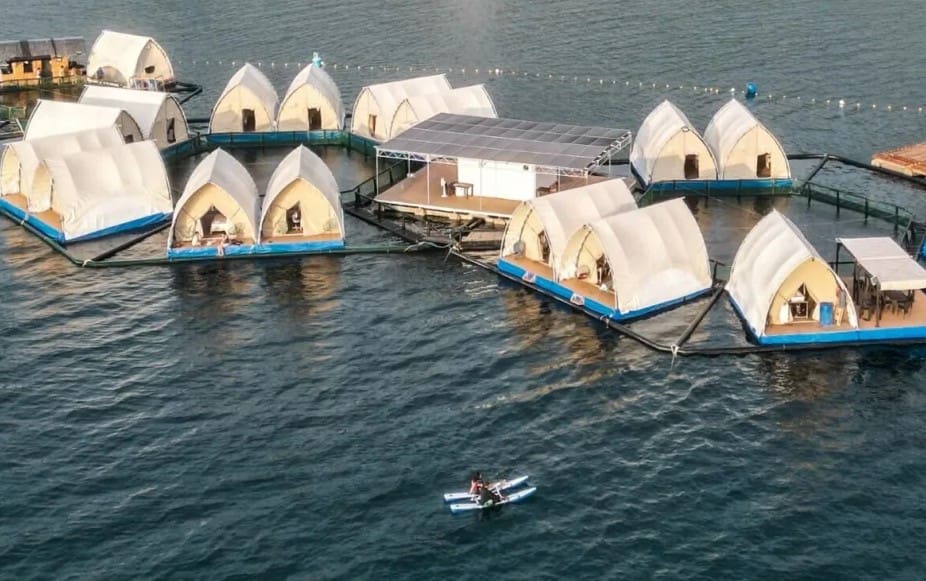
Arkpad floating resort modules in protected lagoon at Florida Keys island
A New Wave in Eco-Tourism: The Case for an ArkPad Type Floating Resort in the Florida Keys
Imagine waking up to the gentle rhythm of water against the hull, stepping directly from your bedroom onto a sun-drenched deck, and spending the afternoon kayaking through crystal-clear shallows—all without a single structure touching the protected seabed below. This is the promise of the next generation of eco-tourism, and it may find its ideal home in the tranquil waters surrounding a Florida Keys island.
The Florida Keys have always walked a fine line between welcoming visitors and preserving the delicate ecosystems that draw them there. Traditional resort development often requires significant land alteration, which can disrupt native habitats and contribute to water runoff. However, a floating resort built on modular “ark-pad” platforms offers an elegant alternative. These aren’t your grandfather’s houseboats; they are sophisticated, architecturally designed modules engineered to sit lightly upon the water, leaving the land and seafloor entirely undisturbed.
The concept is simple but revolutionary. Picture a cluster of sleek, modern floating villas nestled within a protected lagoon. The calm, sheltered waters of a lagoon provide the perfect environment for such a development. Shielded from the open ocean’s swells by the natural barrier of the island, the modules remain stable and serene, offering guests the sensation of being at sea without the motion sickness. This natural protection also means the structures require less heavy engineering to withstand harsh conditions, reducing their material footprint and allowing for a more organic, low-impact layout.
What makes this idea particularly compelling is the potential for modular growth. The “ark-pad” concept is inherently flexible. A resort could begin with just a handful of guest suites and a central pavilion for dining and gathering. As demand grows, new modules—perhaps a yoga deck, a spa, or additional villas—can be towed into place and connected like pieces of a floating puzzle. This “Lego-like” adaptability allows the resort to evolve organically without the need for further coastal construction.
Beyond simply floating, these modules can be designed to actively contribute to the health of the lagoon. Beneath the waterline, the structures could serve as artificial reefs, their submerged surfaces attracting fish and fostering marine growth. They could also be integrated with sustainable systems, such as solar panel canopies for clean energy and onboard water treatment that returns water to the environment cleaner than it was taken.
For the guest, the experience would be one of profound immersion. Waking up in a floating villa means the water is not a view in the distance; it is your immediate horizon. Snorkeling is as simple as stepping off your private deck. Dining could feature seafood harvested from the resort’s own submerged gardens. It is a form of travel that prioritizes connection with the environment over mere observation.
Ultimately, a floating resort in a protected Florida Keys lagoon represents a shift in how we think about coastal development. It is an architecture of subtraction—removing the permanent, the intrusive, and the heavy—and replacing it with something adaptable, harmonious, and buoyant. It offers a way to welcome visitors while ensuring the island and its lagoon remain exactly as they should be: wild, protected, and alive.